Dreaming about lake life in Lake Saint Louis but unsure how HOA dues and amenity fees fit into your budget? You’re not alone. Between master association assessments, neighborhood HOA dues, and seasonal add-ons like boat stickers or pool passes, it can feel confusing fast. In this guide, you’ll learn how fees are structured here, what to verify before you buy, and how to build a lender-ready worksheet so your monthly numbers are accurate. Let’s dive in.
What drives fees in Lake Saint Louis
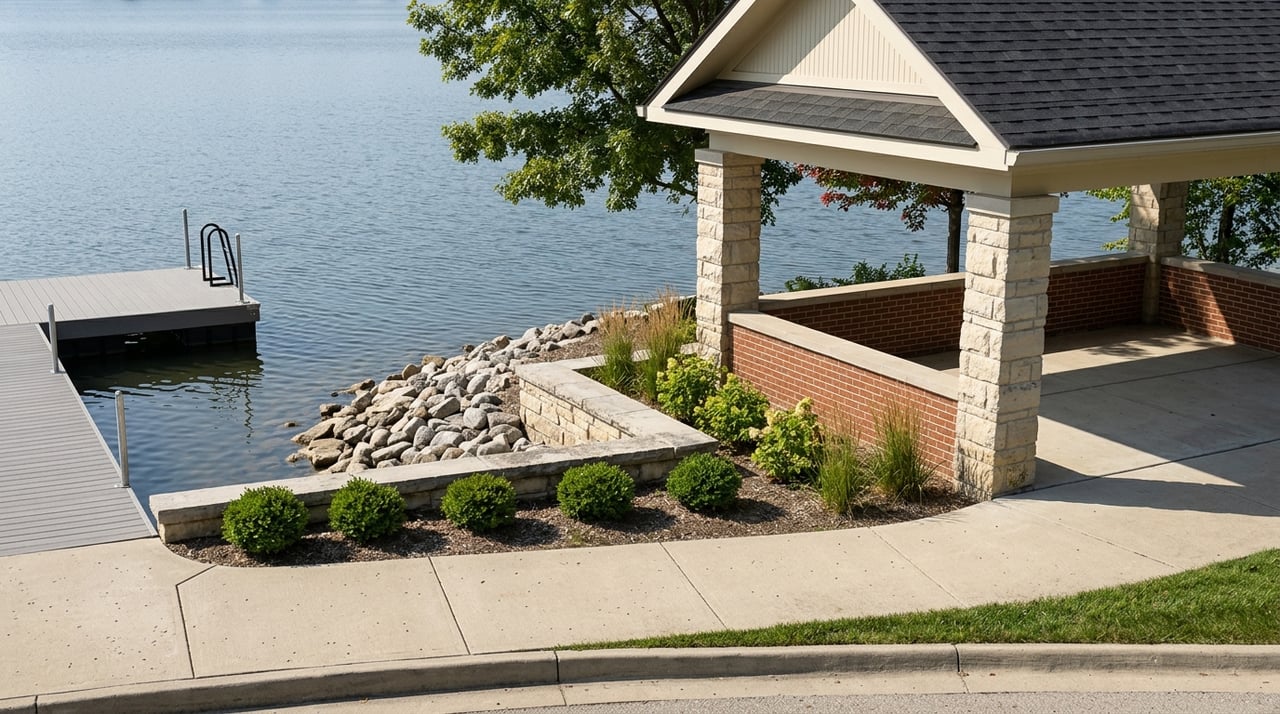
Lake Saint Louis has a unique setup with a master association and many neighborhood-level associations. The Lake Saint Louis Community Association (LSLCA) typically manages shared amenities such as lakes, marinas, beaches, parks, and trails. Many properties also sit within a separate subdivision or condo HOA that covers services closer to home, like landscaping or snow removal.
Your total cost can include both. Master assessments may be mandatory for properties in the master plan. Neighborhood HOAs can layer on their own mandatory dues. Optional amenity packages add flexibility, but they still affect your annual and seasonal spending.
Mandatory vs. optional costs
Think of your costs in two buckets:
- Mandatory assessments: Required dues charged by the master association and your neighborhood HOA or condo association. These fund operations, reserves, and common-area upkeep.
- Optional amenity fees: Voluntary programs such as boat slip or mooring fees, boat registration stickers, pool or aquatic center passes, guest passes, court or clubhouse access, and certain memberships.
Optional can sometimes become effectively required. Some neighborhoods write specific amenity purchases into their covenants. Always review the CC&Rs and any published fee schedule to confirm what is mandatory.
Billing schedules to expect
You will see different billing rhythms:
- Annual assessments: Common for master associations.
- Quarterly or monthly dues: Often used by neighborhood HOAs and condos.
- Seasonal or one-time charges: Pool passes, boat stickers, or marina fees are often annual but tied to a season.
- Special assessments: One-time or temporary charges used for capital projects when reserves or surpluses fall short.
What master assessments include
Master-level assessments in Lake Saint Louis commonly support:
- Operation and maintenance of lakes, marinas, docks, beaches, parks, playgrounds, trails, and community entrances.
- Security staffing, lifeguards, or attendants where applicable.
- Administrative costs such as insurance for common areas, legal and management fees, and community programs.
- Reserve contributions for future projects like shoreline stabilization, dock or path repairs, or equipment replacement.
Knowing what is covered helps you compare homes. A property with robust master services may have a higher assessment but fewer out-of-pocket costs for shared amenities.
Common amenity add-ons
Many owners choose extras that match their lifestyle. In Lake Saint Louis, common elective charges include:
- Boat slip or mooring fees and seasonal boat registration stickers.
- Marina services and ramp access passes.
- Pool or aquatic center passes, plus guest passes.
- Court or clubhouse memberships and event rentals.
- Golf or fitness memberships if available within the community.
If boating or pool access is a must for your family, plan these items into your annual and seasonal budget from day one.
Hidden pass-throughs to plan for
Beyond dues, HOAs often bill or pass through everyday services. Ask the association or management company how these are handled for your specific property:
- Utilities and services: Trash and recycling, exterior water for irrigation, common-area electricity, street lighting. Sewer and water are usually billed by the city or county, but some private developments manage certain utilities through the HOA.
- Maintenance and services: Lawn and landscape for common areas, snow removal on private streets or sidewalks, pest control for shared spaces, and exterior building maintenance in condominiums.
- Insurance and reserves: Master policy premiums for common areas and buildings, plus reserve contributions. Condo owners usually carry an HO-6 unit policy for interiors and may want loss assessment coverage.
- Administrative fees: Late fees and interest, fines for rule violations, estoppel or payoff statement fees when a property is sold.
- Rental-related fees: If rentals are restricted or require registration, there may be registration or inspection fees, and you may need to meet additional insurance requirements.
How to verify amounts before you buy
You can reduce surprises by requesting documents early, ideally before ratifying your offer or during your contingency period. Ask the association or management company for:
- Current budget, recent financials, and a delinquency report to gauge reserve health and the likelihood of special assessments.
- The latest reserve study, if available, to understand upcoming capital needs and funding levels.
- CC&Rs, bylaws, and rules to confirm mandatory vs. optional fees, amenity rules, and any rental or boat limitations.
- A fee schedule or amenity price list for optional programs and seasonal deadlines.
- Association meeting minutes from the past 6 to 12 months for visibility into pending projects, litigation, or assessments under consideration.
- An estoppel certificate, which shows current dues, billing frequency, and whether any assessments or fines are outstanding.
- The association’s certificate of insurance for master policy details.
Local sources to consult include the LSLCA office or website for fee schedules and amenity rules, the City of Lake Saint Louis for ordinances and lake regulations, the St. Charles County Recorder of Deeds for recorded plats and covenants, and the St. Charles County Assessor for property tax data.
Lender requirements and presentation
Underwriters often request association verification as part of the mortgage process. Requirements vary by loan type, but you should be prepared to provide:
- An estoppel certificate or documented association verification of dues and any outstanding or pending assessments.
- The association budget and, in some cases, proof of reserve funding.
- For condos or project-based communities, occupancy and budget details aligned with investor standards.
When you present HOA costs to your lender:
- Convert annual charges to monthly equivalents so they fit into your monthly housing expense.
- List one-time closing items, such as transfer or capital contribution fees, separately for closing cost estimates.
- Clearly label what is mandatory. Lenders count mandatory recurring assessments as part of housing expenses. Optional fees may not be counted if they are truly voluntary and cancelable.
Build your HOA budget worksheet
Use this framework to capture everything in one place. Mark what is mandatory and convert annual figures to monthly equivalents.
Principles to follow:
- Treat mandatory association assessments as recurring housing costs.
- List optional amenities as discretionary line items so you can include or exclude them from your monthly cash flow.
- Ask about planned capital work in the next 2 to 5 years and build a cushion for special assessments.
- Expect condo dues to cover more building insurance and maintenance. Single-family homes in master associations may have lower neighborhood dues but still owe master assessments.
Example formulas:
- Monthly equivalent = Annual amount / 12
- Total monthly recurring = Sum of monthly equivalents for all mandatory items (and any optional items you choose to include)
Suggested worksheet:
| Description | Mandatory? Y/N | Billing frequency | Annual amount | Monthly equivalent | Notes |
|---|---|---|---|---|---|
| Master association assessment (LSLCA) | |||||
| Neighborhood HOA dues | |||||
| Pool or amenity pass (optional) | |||||
| Boat slip/mooring/boat sticker (optional) | |||||
| Marina or ramp fees (optional) | |||||
| Trash/recycling if billed via HOA | |||||
| Common-area utilities (lighting, irrigation) | |||||
| Snow removal/road maintenance | |||||
| Reserve contribution if itemized | |||||
| Special assessment (one-time) | |||||
| Transfer/estoppel fee at sale (one-time) | |||||
| Homeowner insurance (HO-6 or HO-3) | |||||
| Flood or other hazard insurance | |||||
| Rental registration fee | |||||
| Late fee cushion |
Add a total for monthly recurring costs and a separate total for one-time or closing items. Share the mandatory monthly subtotal with your lender.
Red flags that raise costs
Take time to study the financials and recent meeting minutes. Potential warning signs include:
- Low reserves compared to capital needs identified in the reserve study.
- Frequent special assessments in recent years.
- High delinquency rates among owners.
- Ongoing litigation or major capital projects announced.
- Complex amenities such as marinas or boat basins that may have higher operating and repair risk.
These do not automatically mean you should walk away, but they do warrant closer review and a stronger budget cushion.
Smart tips for your first 12 months
- Confirm billing dates and late fee rules so you never miss a payment.
- Note seasonal deadlines for pool passes, boat stickers, or slip renewals.
- Review amenity guest policies before hosting friends or family.
- Revisit your worksheet after your first full cycle. Adjust for any changes in dues or usage.
Buying in Lake Saint Louis gives you access to a lifestyle many people love. With the right prep, you can enjoy the amenities and keep your budget steady from the start.
If you want a second set of eyes on your HOA documents or help building a lender-ready worksheet, schedule your free consultation with The Lisa Adkins Team. Our local experience helps you make clear decisions with confidence.
FAQs
Are Lake Saint Louis amenity fees included in HOA dues?
- Not always. Master assessments often cover basic lake privileges, while items like boat slips, seasonal pool passes, and some premium services are commonly billed separately as optional packages.
Will my lender count optional amenity fees in my ratios?
- Lenders usually include mandatory recurring assessments in housing expenses. Optional fees may not be counted if they are truly voluntary and cancelable. If covenants make a fee effectively required, it will be treated as mandatory.
How can I tell if a special assessment is likely?
- Review the reserve study, current budget, and recent meeting minutes. Underfunded reserves, deferred capital projects, or frequent past special assessments are common indicators.
Who pays estoppel or transfer fees at closing?
- Practices vary. It is common for sellers to pay, but your contract controls. The estoppel shows current dues and any outstanding amounts and is often required by lenders.