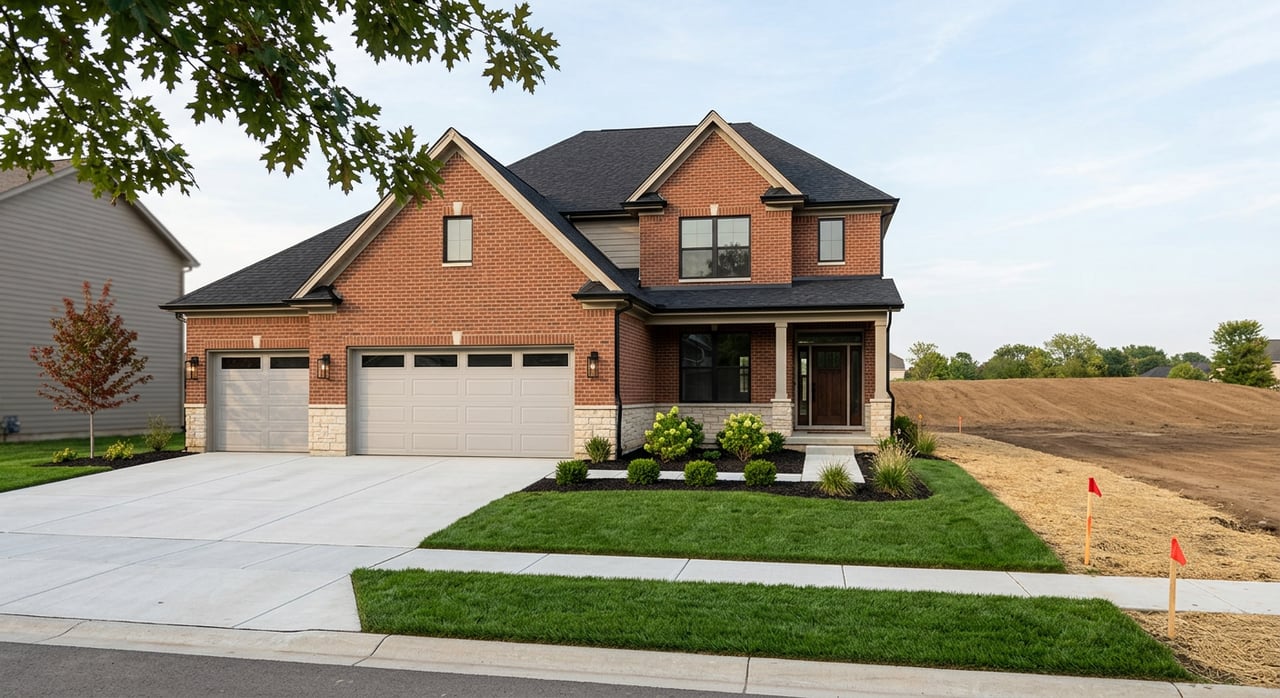
If you love the idea of a fresh, efficient home built just for you, O’Fallon is a smart place to start. New communities and custom lots keep opening across southern and western St. Charles County, but the process looks different from buying a resale home. You want clarity on where to build, which lots make sense, how builder contracts work, and what timelines to expect.
In this guide, you’ll learn how to find the right community, vet a lot, navigate builder paperwork, and keep your build on track. You’ll also see how a local buyer’s agent can protect your budget and your timeline from day one. Let’s dive in.
Where new homes are growing in O’Fallon
Active master-planned and multi-builder communities are expanding across the southern and western parts of O’Fallon and nearby St. Charles County. A standout example is Streets of Caledonia, a large master plan with single-family homes and townhomes from multiple builders. You can review available homesites and current offerings on the builder’s page for the Streets of Caledonia community.
You’ll also see activity in neighborhoods such as Post Farms and Villages at Post Farms (McBride Homes), Harvest, The Reserve at Lakeview Farms, Enclave at Brookside, and infill projects like Strawberry Farms. For live details on lots, pricing, and school-district assignments, go straight to the builder’s page. For example, McBride shares updates for Post Farms in O’Fallon.
How to check a neighborhood’s status
Before you fall in love with a lot, verify the development phase and timeline. The City publishes permit counts, active projects, and an interactive developments map that show what is approved, under construction, or complete. Use the City’s Building Division page for contacts and links to permits and mapping resources at O’Fallon Building Permits. You can also see summaries of recent permit activity in the city’s community development reports.
How to vet a buildable lot in O’Fallon
Not every lot is equal. Site conditions, utilities, and rules can change your budget and your build plan. Use this quick checklist for every lot you consider.
- Jurisdiction and utilities. Confirm whether the lot is inside O’Fallon city limits or in unincorporated St. Charles County. City lots follow O’Fallon’s permitting and inspections. Ask which water, sewer, and electric providers serve the property. The City lists utility contacts on the Building Permits page.
- Sewer and water availability. New subdivisions in the city typically connect to municipal water and sewer. Custom or edge lots may require a septic system or well. Ask about any connection or lateral fees and who pays them.
- Floodplain, wetlands, and drainage. Check FEMA maps and confirm any drainage and finished-floor requirements with City or County staff. Lots near creeks or low areas can add site costs or need elevated foundations. The City’s development resources at Building Permits are a good starting point.
- Topography and soils. For custom homes, consider a geotechnical soil test. Local soils and groundwater can affect foundation type, drainage plans, and grading costs. City bid specs often reference soil and grading considerations, as seen in this engineering specification example.
- Easements, setbacks, and CC&Rs. Request the recorded plat, HOA covenants, and architectural rules early. Setbacks, fence rules, and exterior-material standards can affect your usable area and your future resale.
- Lot premiums and terrain costs. Builders often charge premiums for cul-de-sac locations, green-space backing, or walkout lots. Some parcels need extra grading or retaining walls. Ask for a line item that separates base price, lot premium, and site-work costs before you commit.
- Title and liens. Get a recent title commitment and ask about unpaid assessments or mechanic’s liens, especially if the seller is a developer.
Builder contracts vs resale: what to expect
Builder contracts are designed to manage a construction process. They are not the same as standard resale agreements. Knowing the key differences helps you avoid surprises.
Contract style and purpose
Each builder uses a custom agreement that defines pricing phases, allowances, selection deadlines, change orders, deposits, and completion schedules. Always have an experienced agent or attorney review the full builder contract and the price worksheet before you sign anything.
Deposits and refundability
Expect a lot-reservation or earnest deposit and, in some cases, additional deposits tied to structural or design selections. Some fees are nonrefundable. Get all refund rules and escrow terms in writing.
Price structure and incentives
The advertised base price usually excludes the lot premium, structural options, and design selections. Ask for a clear worksheet that breaks out the base home, lot premium, options, and incentives. Builders commonly promote incentives like closing-cost credits or rate buydowns. You can preview how offerings are presented by reviewing a local example such as the Streets of Caledonia community page.
Change orders and allowances
Get the timeline for structural vs finish selections and understand how change orders are priced. Keep a dated decision log and save all signed change-order documents.
Inspections and punch list
Municipal inspections check for code compliance, but independent inspections can catch workmanship issues earlier. Common checkpoints include pre-foundation, pre-drywall, and final. Many buyers also schedule an 11-month warranty inspection. For an overview of why independent inspections matter, see this guide to home inspection best practices.
Warranties and dispute resolution
Most reputable builders offer a tiered warranty that covers workmanship for one year, systems for two years, and structural components for up to ten years when enrolled in a third-party program. Ask for the full warranty packet and how to submit claims. Learn more about the common “1-2-10” structure from a leading provider at 2-10 New Home Warranty.
Delays and planning your move
Builder contracts often include broad extension language for weather, materials, and supply issues. If you are timing a sale, school calendar, or lease, negotiate clear dates and remedies. Discuss interim occupancy options, bridge financing, or rent-backs with your agent early so your plan stays flexible.
Timelines and inspection milestones
Every site and plan is different, but national data provides a helpful benchmark. Recent analysis shows the average permit-to-completion time for single-family homes in 2023 was roughly ten months, with regional and build-type variation. See the full context from NAHB’s Survey of Construction at Eye On Housing.
Locally, O’Fallon accepts permit applications and schedules inspections through its portal, and inspections requested through the system are typically completed the next day. Plan for review cycles and utility coordination before foundations begin. The City lists permits, contacts, and process details at O’Fallon Building Permits.
Here is a simple timeline you can use to plan:
- Lot prep and foundation: about 2 to 6 weeks based on site conditions and weather.
- Framing and dry-in: about 3 to 6 weeks.
- Mechanical, plumbing, and electrical rough-ins, insulation, and drywall: about 4 to 8 weeks.
- Finishes, fixtures, and punch list: about 4 to 8 weeks.
- Final inspections, certificate of occupancy, and closing: timing depends on municipal scheduling and builder readiness.
Inspection checkpoints many buyers request:
- Pre-foundation inspection to confirm footings and reinforcement.
- Pre-drywall inspection to review framing, mechanicals, electrical, and plumbing.
- Final inspection and independent walk-through to build a punch list.
- 11-month inspection to document warranty items. You can read more about inspection strategy in this home inspection resource.
How a local buyer’s agent protects you
The right agent brings structure and leverage to a complex process. Here is what an experienced buyer’s agent should do for you in a new-build purchase:
- Start representation early. Under recent industry changes, you should sign a written buyer-representation agreement before visiting models or registering at a sales center. This clarifies who represents you and how compensation is handled. Learn why this matters in new construction from this overview on buyer representation.
- Review and negotiate the contract. Your agent will request a line-item price worksheet, confirm deposit and escrow rules, and negotiate incentives such as lot-premium reductions, closing-cost credits, or rate buydowns. They will also explain tradeoffs if incentives require a preferred lender or title company.
- Guide selections and change orders. An agent helps you prioritize structural choices that add long-term value and keeps an eye on allowances and upgrade pricing so you stay on budget.
- Monitor construction and punch lists. Your agent can coordinate independent inspections, attend milestone walk-throughs, and document punch-list items to hold the builder accountable before and after closing.
- Support warranty claims. If warranty issues persist, an agent familiar with local builders and warranty providers can help escalate concerns. Many builders enroll in third-party structural programs like 2-10 New Home Warranty, which outlines claim procedures.
- Verify taxes and special districts. Some developments use special districts or CIDs that affect taxes or sales/use rules. Your agent can help you check official tax cards and assessments through the state. See an example of state tax-card documentation at Missouri DOR.
Quick next steps
- Ask for a complete price worksheet that separates base home, lot premium, options, and incentives. Review how a local builder presents offerings by looking at the Streets of Caledonia page.
- Confirm lot jurisdiction, utility hookups, and whether the property is in a special district. Request the recorded plat and CC&Rs. Start with O’Fallon Building Permits for contacts and process details.
- Hire an independent inspector for pre-drywall and final, and plan an 11-month inspection for warranty items. This inspection guide explains the value.
- Get the full builder warranty packet and confirm whether structural coverage is backed by a third party. Review the basics at 2-10 New Home Warranty.
- Engage a buyer’s agent who specializes in new construction and sign a written representation agreement at the start. Here’s why that step protects you in new-build purchases.
Ready to build with confidence?
Buying new construction or a lot in O’Fallon can be straightforward when you follow a smart process. You pick the right community, verify the lot, nail down transparent pricing, and keep your build on schedule with the right inspections and oversight. With deep local experience across St. Charles County, our team can help you compare neighborhoods, evaluate lots, negotiate builder terms, and protect your timeline all the way to closing.
If you are ready to map your options, schedule a friendly, no-pressure consultation with Lisa Adkins. We will help you make a confident plan for your new build.
FAQs
How long does new construction take in O’Fallon?
- National data shows average permit-to-completion times around ten months for single-family homes, but local timelines vary by plan, site, and weather. See the context at Eye On Housing.
Where can you verify a neighborhood’s phase or permits?
- Check the City’s Building Division for permits, contacts, and an active-developments map that shows approved and under-construction phases at O’Fallon Building Permits.
What should you look for when buying a lot in O’Fallon?
- Confirm jurisdiction and utilities, sewer or septic needs, floodplain and drainage, topography and soils, easements and CC&Rs, any lot premium, and clear title.
Do you need inspections on a brand-new home?
- Yes. Municipal inspections verify code, but independent pre-drywall, final, and 11-month inspections help catch issues early and document warranty items. Learn more in this inspection guide.
Can you use your own lender or title company with a builder?
- Often yes, but some incentives require a preferred lender or title. Have your agent compare any savings to your best outside options and get incentive terms in writing.
How do lot premiums work in O’Fallon communities?
- Builders may charge more for cul-de-sac, walkout, corner, or green-space lots. Ask for a worksheet that separates the base price from the lot premium and any site-work allowances.